I Worked at Apple. The iPhone Duo Proves They Have Not Changed. Here Is the Business Lesson Every Leader Should Steal.
Apple launched the iPhone Duo today, September 9, 2026, at the "Surprise and Shine" event. It is their first foldable iPhone. It starts at $1,999. It has no Face ID, no telephoto camera, no iPadOS, and a 7.6-inch screen bigger than the iPad mini running phone software. Samsung has been selling foldables for 7 years. On paper, Apple should lose this comparison. They will not. The reason is not the product. The reason is the seamless ecosystem. Samsung has an ecosystem. Google has an ecosystem. Apple is the only company that built one where every connection works without you thinking about it. That seamlessness is the business strategy every leader should study right now.
I used to work at Apple. And yes, I was a huge fanboy. When you work inside that building, you absorb something that is hard to explain from the outside. It is not arrogance, although it looks like that from a distance. It is conviction. Apple does not make products by asking what the competition has and matching it feature for feature. Apple makes products by deciding what the product should be and shipping exactly that, even when the spec sheet says they should not. The original iPhone had no copy-paste. No App Store. No multitasking. And Steve Jobs stood on stage and told the world it was the best phone ever made. He was not lying. He just was not measuring "best" the way everyone else was. That philosophy has not changed in 19 years. The iPhone Duo is proof.
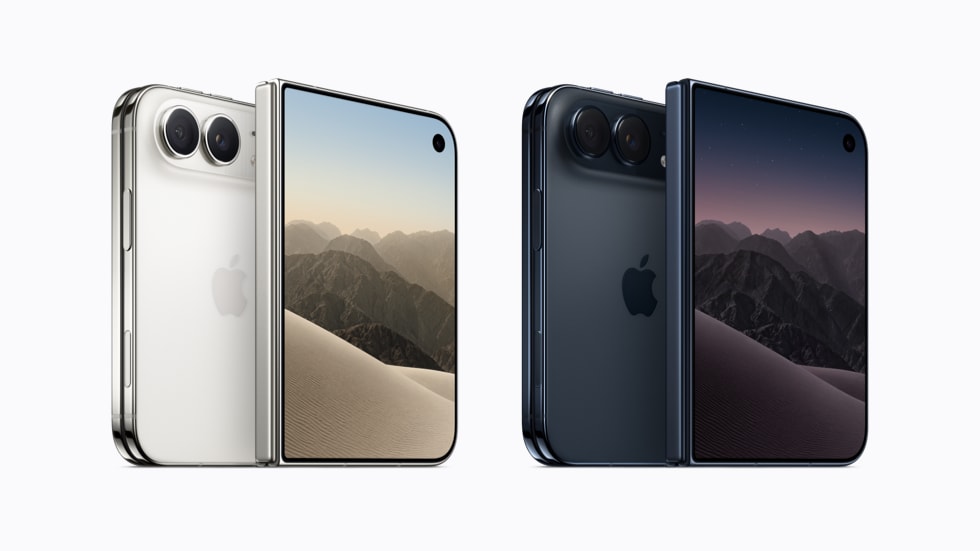
iPhone Duo. Star white and night sky. $1,999. No apologies. Image: Apple Newsroom.
Today is also the first major product launch under new CEO John Ternus, who replaced Tim Cook on September 1. Apple shipped a $2,000 foldable with known trade-offs and presented every one of them as a deliberate decision rather than a compromise. That framing is not spin. It is the same philosophy I watched operate from the inside. And it is the reason Apple wins comparisons it should lose on paper. Apple does not compete by having the most features. Apple competes by building a seamless system that makes leaving more expensive than staying. The iPhone Duo just proved it again.
Why Apple's Seamless Ecosystem Beats Samsung and Google on Every Metric That Matters
When I worked at Apple, the thing that surprised me most was not the products. It was how the people inside the company thought about competition. They did not sit around studying Samsung spec sheets and asking, "How do we match this?" They studied how their own products connected to each other and asked, "How do we make this connection invisible?" That is a fundamentally different question, and it produces a fundamentally different kind of company. Samsung builds the best individual phones on the market. Google builds the best AI assistant. Motorola builds the most fun foldables at a fraction of Apple's price. And Apple outsells all of them. Not because Apple's phone is better. Because Apple's system is seamless in a way that nobody else's is.
Samsung has an ecosystem. Galaxy Watch, Galaxy Buds, SmartThings, Samsung Flow, Quick Share. Google has an ecosystem. Pixel Watch, Pixel Buds, Google Home, Chromecast, Nearby Share. The word "ecosystem" is not what separates Apple from the competition. What separates Apple is that their ecosystem works without you thinking about it. You put on AirPods and they are already connected to the device you are using. You copy a paragraph on your Mac and paste it on your iPhone without doing anything. You start watching a show on your iPad and pick it up on your Apple TV without opening a menu. You get a call on your Mac when your phone is in another room. None of these things require setup, configuration, or a tutorial. They just work. Samsung and Google can build the same features individually. What they have never been able to replicate is the seamlessness. And the seamlessness is the moat.
Think about what happens when you try to switch from iPhone to Android. You lose iMessage, which means every group chat you are in turns you into a green bubble. You lose AirDrop, which means no more instant file sharing with anyone around you. Your Apple Watch becomes a paperweight because it only works with iPhone. Your AirPods lose half their features: no automatic switching between devices, no spatial audio calibrated to your ear shape, no seamless Siri integration. Your iCloud Photos stop syncing. Your saved passwords in Keychain do not transfer cleanly. Handoff stops working. Universal Clipboard disappears. Continuity Camera is gone. Focus modes no longer sync across your devices. Find My stops tracking your AirTags, your kids' devices, and your lost headphones. That is not a phone you are leaving. That is a seamless operating system for your entire life. And Apple built every single one of those connections to be invisible on purpose, because invisible is what makes it impossible to leave.
Apple does not sell phones. Apple sells a seamless system that makes leaving unthinkable.
Every competitor has an ecosystem. Samsung's is good. Google's is improving. What neither of them has is seamlessness. Apple's products do not just connect to each other. They connect without asking you to do anything. A Galaxy Watch that requires three setup screens to pair is an ecosystem. An Apple Watch that activates the moment you put it on your wrist is a seamless ecosystem. That gap is Apple's entire competitive advantage, and it is the only one that matters.
Why Apple Never Apologizes for Missing Features (and Why It Works)
This is the second thing I learned at Apple that most people outside the company never understand. When Apple ships a product without a feature that competitors have, it is almost never because they could not build it. It is because they chose not to include it in this version. The original iPhone had no copy-paste for two years. The first iPad had no camera. The first Apple Watch was widely criticized as slow and limited. The iPhone 7 removed the headphone jack and the entire internet lost its mind. In every single case, Apple stood on stage, said nothing apologetic, and shipped the product as if it were exactly what the world needed at that exact moment. And in every single case, Apple was eventually proven right, not because the first version was perfect, but because the second and third versions fixed the gaps while the competitors who had those features first never built the ecosystem to keep their customers from leaving.
The iPhone Duo is the same playbook running in 2026. No Face ID? They chose Touch ID on the side button because it works whether the phone is open or closed without requiring a hinge-mounted sensor array. No telephoto camera? They chose to prioritize the 48MP Fusion Main and Ultra Wide over adding a third lens to a device that already has to manage heat, battery, and thickness across a folding mechanism. No iPadOS? They chose to keep the software experience consistent with every other iPhone rather than fragmenting it into a hybrid that would confuse developers and users. You can disagree with every one of those decisions. Apple does not care. That is not arrogance. That is brand discipline. And brand discipline is the rarest competitive advantage in business because it requires saying no to things your customers are loudly asking for.
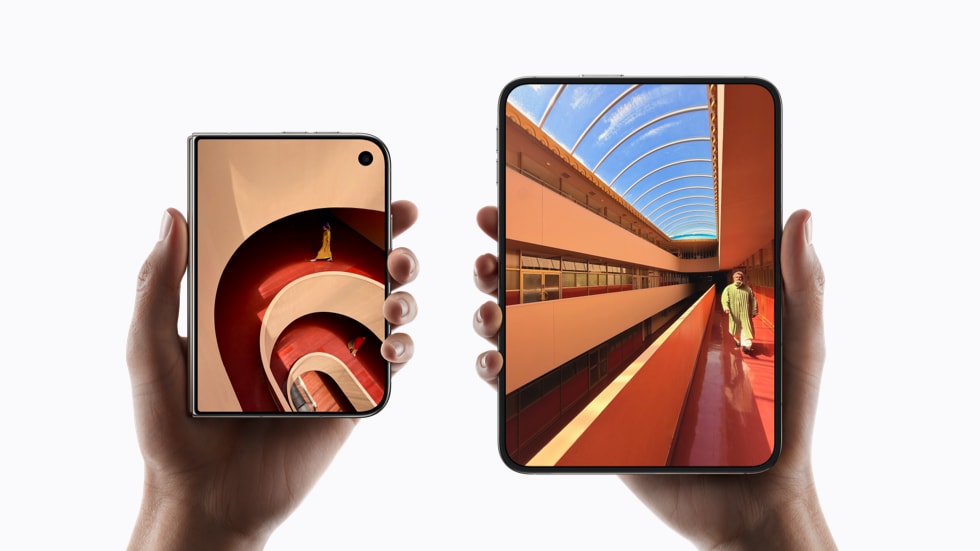
iPhone Duo: 7.6 inches open, 5.4 inches closed. Image: Apple Newsroom.
Every business leader says they want to build a premium brand. Very few are willing to do the thing premium brands actually require: ship something incomplete with total conviction and let the market catch up to your reasoning.
iPhone Duo vs Galaxy S26 Ultra vs iPhone 18 Pro Max: Full Spec Comparison
Here is the comparison Apple never makes on stage, and here is why they do not need to. On paper, the iPhone Duo loses to the Galaxy S26 Ultra in nearly every measurable category. Samsung gives you a 200MP camera, a hardware privacy display, an included S-Pen, Face ID equivalent, and a lower price. The iPhone Duo gives you Touch ID, a dual-camera system, and iOS on a tablet-sized screen. In any rational spec-by-spec evaluation, Samsung wins. And yet Samsung's entire foldable lineup, across eight generations, has never outsold a single iPhone launch weekend. The spec sheet is not the game. The seamless ecosystem is the game. And nobody else is playing it at the same level.
| Spec | iPhone 18 Pro Max | Galaxy S26 Ultra | iPhone Duo |
|---|---|---|---|
| Price (256GB) | $1,299 | $1,299 | $1,999 |
| Display | 6.9" OLED | 6.9" AMOLED | 7.6" inner / 5.4" outer |
| Chip | A20 Pro (2nm) | Snapdragon 8 Elite Gen 5 | A20 Pro (2nm) |
| Main camera | 48MP variable aperture | 200MP | 48MP Fusion (dual only) |
| Telephoto | Yes (5x) | Yes (5x optical) | No (2x digital crop) |
| Face unlock | Face ID | Face recognition | Touch ID (side button) |
| Stylus | No | S-Pen included | Apple Pencil (sold separately) |
| Operating system | iOS 27 | One UI 8 (Android 16) | iOS 27 (not iPadOS) |
| Privacy display | No | Hardware-level | No |
| Battery | Best iPhone battery ever | 5,000 mAh | Dual battery, 24hr mixed use |
| Seamless ecosystem | Total (15 years deep) | Partial (individual pieces) | Total (15 years deep) |
| Available | September 18 | Available now | October 23 |
The row that matters is the second to last one: seamless ecosystem. Samsung has an ecosystem. Galaxy Watch pairs with Galaxy phones. Galaxy Buds auto-connect. SmartThings controls your home. Individually, each feature works. But switching from an iPhone to a Galaxy and setting all of it up requires hours of configuration, multiple apps, and a tolerance for friction that most people do not have. Apple's version of the same features requires zero setup. That is the difference between an ecosystem and a seamless ecosystem. Samsung builds the pieces. Apple builds the invisible glue between them. iMessage alone keeps more people on iPhone than any camera, chip, or display specification ever could. That single app, which Apple gives away for free and refuses to make cross-platform, is arguably the most valuable customer retention tool in the history of consumer technology. And it does not appear on any spec sheet.
iPhone 18 Pro, Pro Max, and iPhone Duo: Pricing, Specs, and Pre-Order Dates
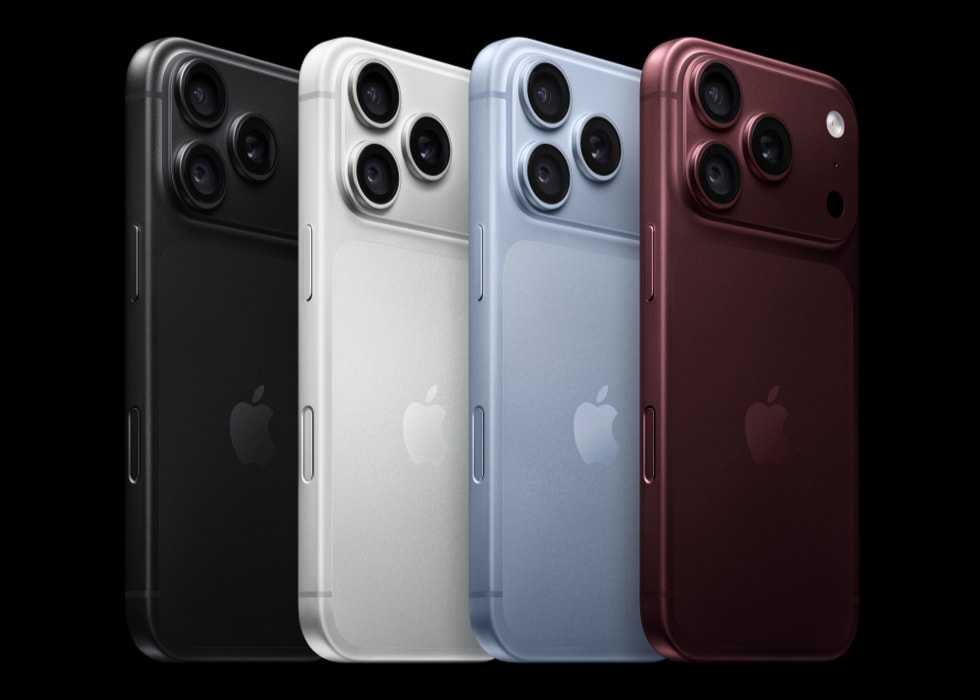
iPhone 18 Pro. Black, silver, glacier, burgundy. The one most people should actually buy. Image: Apple Newsroom.
The iPhone 18 Pro and Pro Max are the products most people should buy. The A20 Pro chip on Apple's first 2nm process is a genuine leap: 20% faster CPU, 40% faster GPU, and a dual 16-core Neural Engine with double the AI processing power of last year. The variable aperture camera is the headline feature. Six laser-cut blades transition between aperture settings automatically, adjusting for depth of field and lighting. Samsung has had variable aperture for several generations, but Apple's computational photography pipeline tends to produce more consistent results for non-professional users. The battery gains are real: up to 45 hours of video playback on the Pro Max, and 50% charge in 15 minutes. The burgundy color will sell out first.
The iPhone Duo is for the person who wants to be first, knows the second generation will be better, and does not care. That is a legitimate buyer. It is not most buyers. If you are already deep in the Apple ecosystem, the Pro Max at $1,299 gives you better cameras, better battery, Face ID, and a form factor refined over more than a decade. The iPhone Duo gives you a conversation starter and a genuinely new form factor that Apple will almost certainly make dramatically better next year. First-generation Apple products are always the most exciting and the least practical. That has been true since the original iPhone, and it is true again today.
Who Is John Ternus? Apple's New CEO and What His First Product Launch Signals
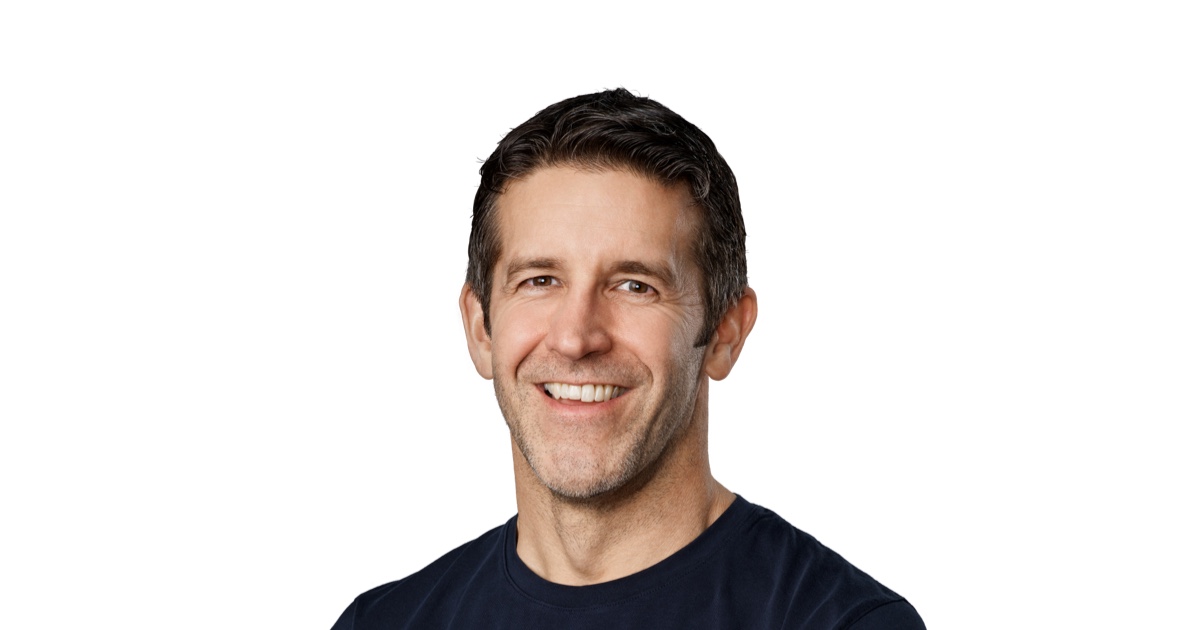
On September 1, 2026, John Ternus replaced Tim Cook as Apple CEO. Cook moved to executive chairman. This is the most significant leadership transition at Apple since Cook replaced Steve Jobs in 2011, and the tech press has been strangely quiet about it. Here is what it means: the person running Apple is now a hardware engineer. Ternus joined Apple's product design team in 2001, became VP of Hardware Engineering in 2013, and joined the executive team in 2021. He has overseen hardware engineering on every major Apple product category for over two decades. Cook was an operations genius who perfected supply chains and squeezed margins. Ternus is the person who built the products those supply chains delivered. That difference will show up in every product decision Apple makes for the next decade.
Today's event is the first evidence. The iPhone Duo is a hardware bet that Cook's Apple would likely have delayed another year or two to make sure the first version was unassailable. Ternus shipped it with known compromises because he believes the category is worth entering now and iterating from inside, rather than waiting until every gap is closed. That is a product engineer's instinct, not an operations executive's instinct. Whether it is the right call will take two years to answer. But it is a different kind of call, and the difference matters for anyone watching Apple's trajectory.
3 Business Strategy Lessons Every Leader Should Steal From Apple
You do not have to be a tech company to learn from what Apple did today. The playbook works in any industry where customers use more than one of your products or touch more than one of your services. Three moves. In order.
First, build a seamless ecosystem, not just an ecosystem. Every competitor has an ecosystem. What makes Apple's untouchable is that it works without the customer doing anything. The lesson is not "build multiple products." The lesson is "make the connections between your products invisible." If your customers use three of your services and each one feeds the other two without a login screen, a setup wizard, or a sync delay, you have built something no competitor can replicate by building a better version of any single product. If those connections require effort from the user, you have just built a product line, not a moat.
Second, ship with conviction and iterate. Apple does not wait until every feature is ready. They decide what the product should be, ship it with total confidence, and improve it aggressively in subsequent versions. The original iPhone had no App Store. The original Apple Watch was slow. Every first-generation Apple product has been missing something the competition already offered. In every case, the second version fixed the gap, and the customers who stayed through the first version became the most loyal buyers in the company's history. The cost of waiting for perfection is almost always higher than the cost of iterating in public.
Third, never apologize for a deliberate decision. This is the hardest one. Most companies, when they ship without a feature competitors have, immediately start explaining why. Apple does not. At no point today did anyone on stage say, "We know you want Face ID, and it is coming next year." They presented Touch ID as a feature, not a compromise. That framing changes how the audience receives the product. If you apologize for a trade-off, the audience hears weakness. If you present it as a choice, the audience hears confidence. The product is the same in both cases. The perception is not. Brand discipline means having the conviction to present your decisions as intentional, because they are.
Apple did not win today because the iPhone Duo is the best foldable phone. Apple won because it is the only foldable phone connected to a seamless ecosystem that took 15 years to build and that no competitor can replicate. Samsung can build the features. Google can build the AI. Neither of them can build the invisible glue that makes every Apple product work together without you ever opening a settings menu. The product is the entry point. The seamless ecosystem is the business. Every leader building anything should understand the difference.
Common Questions